

Pastor's Corner
Stewardship and Favor
Sunday, Jan. 26, 2025
May the Lord give you peace!
I want to thank everyone who completed their stewardship forms this year. Msgr. Thomas McGread, the pioneer of stewardship in our Diocese, believed that strong parish stewardship requires a renewed, deliberate, and written commitment each year.
When discerning our stewardship response, it’s easy to focus solely on the “response” aspect. However, what makes stewardship unique in our Diocese is that our response is rooted in gratitude. Gratitude transforms stewardship from a mere obligation into a source of joy. While gratitude is inspiring in concept, it can sometimes feel dutiful or lack enthusiasm—like when my parents would remind me as a child, “What do you say? Thank you!” Uggh.
But there’s a deeper well to draw from: giftedness. Dan Loughman, one of the architects of stewardship in our Diocese, often said that the greatest challenge today is our failure to appreciate our giftedness. He taught that giftedness comes before gratitude. This aligns with the very definition of stewardship: a grateful response born from recognizing God’s gifts. Our journey doesn’t start with gratitude—it starts with an awareness of our giftedness. The fact that we exist and have life is itself an incredible gift.
St. Thomas Aquinas takes this even further, teaching that all gifts we receive reflect the favor of the giver. No one gives a gift unless they hold the recipient in high regard. Grace, literally “God’s gift,” reveals how we are favored by God. As Aquinas says, “It is understood that there is something in him pleasing to the other.” Before reflecting on our gifts, we can contemplate this profound truth: we are beloved in God’s eyes.
Jesus lived this truth perfectly. At His baptism, the Spirit descended like a dove, and the Father declared, “This is my beloved Son, with whom I am well pleased. Listen to Him!” (Matthew 3:17). This foundational truth anchored Jesus' mission, and I am sure that he returned to it often in prayer. Also, consider the Blessed Virgin Mary. Upon announcing her mission to become the mother of God, the angel Gabriel addresses her as “Highly Favored One” (Luke 1:28).
Stewardship is a way of life that goes beyond parish commitments and extends throughout the year. To move from viewing stewardship as a chore to living it with greater joy, I encourage you to reflect prayerfully and often on this truth: You are favored—beloved—by the Father, who is well pleased with you.
Ad majorem Dei gloriam, Fr. John F. Jirak, Pastor
My Saint of the Year: St. Faustina
Sunday, Jan. 5, 2025
May the Lord give you peace!
It’s a new year, and I have chosen my saint and virtue of the year. My saint is St. Maria Faustina Kowalska, renowned for her message of Divine Mercy. My virtue is prudence—the habit that perfects the intellect, guiding us in the best ways to achieve our goals. It’s sometimes called “right reason applied to action.” Don’t worry, I’ll delve deeper into this “charioteer of the virtues” as the year unfolds!
I am also excited to announce that I will be teaching regular sessions several times a month on the diary of St. Faustina, commonly referred to as Divine Mercy in My Soul. Her Diary gives a personal witness to the often messy, yet beautiful, journey of the spiritual life. The Lord sometimes spoke to her through locutions—a special gift by which a chosen soul hears the Lord speak. Occasionally, these messages were for her alone, and at other times, they were intended for everyone. Indeed, the Lord’s message of mercy to St. Faustina is meant for all of us.
I would venture to say that mercy is particularly relevant to this Jubilee Year of Hope, which began on December 24, 2024, and continues through January 6, 2026. In his proclamation titled Hope Does Not Disappoint announcing the Jubilee, Pope Francis wrote, “Everyone knows what it is to hope. In the heart of each person, hope dwells as the desire and expectation of good things to come, despite our not knowing what the future might bring.” All of these “good things to come” are expressions of God’s merciful love.
I conclude with the words Jesus spoke to St. Faustina in 1936: “I am giving you three ways of exercising mercy toward your neighbor: the first – by deed, the second – by word, the third – by prayer. In these three degrees is contained the fullness of mercy, and it is an unquestionable proof of love for me.”
Ad majorem Dei gloriam, Fr. John F. Jirak, Pastor
Virtue Restores Order to the Soul
Sunday, December 29, 2024
May the Lord give you peace!
As you consider your virtue of the year, I’d like to share some thoughts about virtue and our struggle to achieve it in light of the doctrine of Original Sin. We will soon celebrate the Baptism of the Lord, through which Christ gave power by the words and water poured at our own Baptism. Although Original Sin is removed at our Baptism, some of its effects remain.
Among the virtues that help us overcome these lingering effects are temperance and fortitude. These virtues help us become masters of ourselves, governing our emotions—also known as our passions. Temperance regulates our impulses toward pleasurable things (such as food, drink, and sexual matters), and fortitude shapes our responses to challenges and obstacles, channeling our instinct to fight for what is good.
The difficulty in cultivating temperance and fortitude stems from the fact that we inherit a bad habit, a firm disordered inclination, due to Original Sin. While the guilt of Original Sin is removed at Baptism, our emotions remain unruly, not easily guided by reason. It’s like adopting an untrained dog that barks at everyone. Training it is possible, but not easy. Similarly, the passion of anger may leap to lash out at anything disagreeable. The virtue of meekness (a sub virtue of temperance) can tame and rule anger according to reason over time.
Original Sin introduced rebellion into our hearts. Our emotions no longer follow reason naturally, and our reason resists following God’s will. Although science cannot detect this spiritual reality, we recognize it through experience. We often find ourselves conflicted, as St. Paul describes: “For I delight in the law of God, in my inmost self, but I see in my members another law at war with the law of my mind…” (Romans 7:22-23).
Does this mean we are doomed to disorder and chaos within ourselves? Not at all. Virtue, aided by God’s grace, helps restore order to our souls. Through patience, effort, and the grace of Christ, we can reform and reorient our passions. Temperance and fortitude, in particular, help us reestablish order. Understanding the doctrine of Original Sin can bring relief: we know why our emotions resist reason and God, and we need not be surprised or discouraged when we struggle, nor struggle mightily. We are all in a wrestling match.
With God’s grace, hard work, and time, we collaborate with Him to establish integrity and character in our souls. In doing so, we begin to taste the peace and fullness of life commenced in us at Baptism.
Ad majorem Dei gloriam, Fr. John F. Jirak, Pastor
Faith, Hope & Love
Sunday, December 22, 2024
May the Lord give you peace!
It’s that time of year again—yes, choosing a virtue to focus on for the year. As part of a three-part series, this reflection will consider the birth of Jesus as the birth of the supernatural life within our souls through the virtues. The birth of Christ in the world is for our eternal salvation, and the road by which He saves us is the path of the virtues. First and foremost, the theological virtues of faith, hope, and charity, which elevate the powers of the intellect and will, actually direct us toward a supernatural destiny and ultimate happiness in God Himself.
Faith, hope, and charity are “born” in the soul at baptism (CCC, 1813). Yes, we celebrate a new birth both at Christmas and at baptism. We are born again at baptism as children of God. Without the birth of the virtues of faith, hope, and charity, there is no Divine life within us—and this Divine life is Christ’s own life.
Now, as with any of God’s gifts, they must be freely chosen and exercised to be fruitful. Having the supernatural gifts of faith, hope, and love—whereby we now have the power to know, love, and serve God—without exercising them is like a person with a genius intellect refusing to study and handing themselves over to a life of drugs. The common response to such cases is, “What a waste.” This can happen to us when we fail to practice the virtues of faith, hope, and charity. These virtues are first gifts of God that establish within us the power to act for, with, and in God.
In considering the virtue that you will choose for the year, it is helpful to reflect on the hierarchy of virtues. Faith, hope, and charity are the greatest because their object is God Himself. And of these virtues, charity is the greatest (1 Corinthians 13:13). Charity is the love by which we love God and all that belongs to God for His sake.
In charity, it is not we who love God first (1 John 4:19), but God who first loved us and poured within us the life of charity born to us in baptism. The Advent season is our preparation to more fully receive and respond to the love of God as we celebrate the birth of the Savior. In other words, it is directed toward growing in the greatest of the virtues, faith, hope and charity, and, especially charity. In the next two reflections, I will offer some thoughts and logic about virtues and selecting a virtue for the year.
Ad majorem Dei gloriam, Fr. John F. Jirak, Pastor
Stewardship Renewal: Stewardship of Treasure
Sunday, December 8, 2024
May the Lord give you peace!
Money matters! Scripture never states that money doesn’t matter for our spiritual life. In fact, scripture teaches that money plays a significant role in our relationship with God. In the Old Testament, people's relationship with God suffered because they stopped tithing. Their failure to tithe of their first fruits was akin to rejecting God himself. Malachi 3 illustrates this with a piercing question: “Can anyone rob God? But you are robbing me! And you say, ‘How have we robbed you?’ Of tithes and contributions!” Here, the people endure a famine as a consequence of their actions.
As Catholics, we understand the Biblical tithe as stewardship of treasure. This practice is rooted in the faith that everything we have is first and foremost a gift from God. As St. Paul reminds us, “What do you have that you did not receive? If then you received it, why do you boast as if you did not receive it?" (1 Cor. 4:7). The 10 percent “first fruits” tithe (Exodus 23:19) moves faith from an abstract idea to a concrete practice that rightly orders our relationship with God.
The allure of money is strong—so strong that Jesus said, “the love of money is the root of all evil.” The logic behind our annual stewardship renewal counters our temptation to reclaim the 10 percent we give to God, preventing us from rejecting the truth that all we have is a gift from God.
My personal history with tithing isn’t perfect. Growing up on the border of the Wichita/Salina Dioceses, without a local Catholic School, my family rarely discussed tithing. We donated, but not a full 10 percent. In my early 20s, discussing tithing with my parents, I saw the challenge it posed, especially as they were farmers with modest income and no Catholic school for their children. Yet, they rose in faith, began tithing 10 percent, and experienced many blessings from this act of faith.
If you are not currently tithing, consider gradually increasing your gift. If you’re giving 2 percent, try 3 percent. If 7 percent, then aim for 8 percent this year, working toward the Biblical tithe. God meets us where we are, so there’s no need to run a marathon on your first day of training.
Ultimately, we tithe as a primary expression of our appreciation and love for God. God desires our gifts to be given freely, not out of mere obligation. As Bishop Eugene Gerber often quoted from St. Paul: “Each one must give as he has decided in his heart, not reluctantly or under compulsion, for God loves a cheerful giver” (2 Cor. 9:7).
Ad majorem Dei gloriam, Fr. John F. Jirak, Pastor
Stewardship Renewal: Who is my neighbor? Those who belong to my parish!
Sunday, December 1, 2024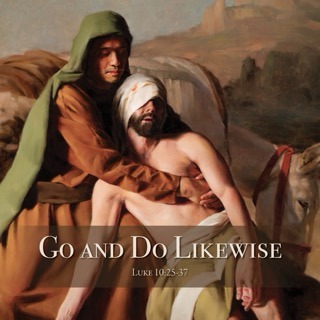
May the Lord give you peace!
It is insightful that the Catholic Church defines parishes based on territory rather than personal preference. Defining parishes by where we live offers a valuable opportunity to cultivate merciful love, embodying Jesus' command to “Go and do likewise” (Luke 10:37). In the parable of the Good Samaritan, Jesus extends the concept of neighbor to those outside the circle to whom we naturally owe a response. We find ourselves in parishes surrounded by people who we did not choose. This gives us the opportunity to help others by sharing our gifts without any expectation of receiving something in return. It shapes our hearts with the graciousness of God.
So what does that have to do with “Who is my neighbor?” This concept aligns with St. Augustine’s teachings. He wrote that there are limits to the number of people we can realistically serve. Consequently, we are commanded to love the neighbors with whom we are in closer connection due to specific circumstances, places, and times.
Our parishes are beautifully established within territorial boundaries to foster love of neighbor out of love for God. By Canon Law (Canon 518), all the Catholics who live within our parish boundaries are our fellow parishioners. We do not choose our fellow parishioners (neighbors); rather, God brings us together, often with people we may not have selected ourselves, nor whom we would choose if we were free to do so. We are united by Providence, not personal choice. The context of our specific time and place has brought us together as fellow parishioners, neighbors in the Lord. Stewardship is the way of life through which we sacrifice our time, talent, and treasure to assist these neighbors—our fellow parishioners who Providence has placed in our lives—to fulfill the divine command to “Go and do likewise.”
Ad majorem Dei gloriam, Fr. John F. Jirak, Pastor
Stewardship Renewal: Go And Do Likewise
Sunday, November 24, 2024
May the Lord give you peace!
This year’s stewardship theme is “Go and do likewise.” (Luke 10:25-37). These words come from Jesus Himself, responding to the question: “And who is my neighbor?” Through the parable of the Good Samaritan, Jesus teaches us that our neighbor includes anyone in need—even those to whom we owe nothing.
Stewardship is about sharing with God and our neighbor. Often, though, we limit our generosity to those we feel an obligation to help: family, friends, colleagues. In the parable, a priest and a Levite pass by a wounded man, but a Samaritan stops to help—showing mercy beyond the demands of justice. Mercy calls us to love others as God loves us: selflessly and without expecting anything in return.
St. Catherine of Siena calls this gratuitous love. She explains that while we owe God our love, He places us among our neighbors so we can love them freely. The Heavenly Father tells Catherine: “This is why I put you among your neighbors: so that you can do for them what you cannot do for me—that is, love them without any concern for thanks and without looking for any profit for yourself. And whatever you do for them, I will consider done for me.”
“Go and do likewise” challenges us to extend our stewardship beyond immediate relationships where we benefit personally. St. Thomas Aquinas calls these relationships of delight and usefulness. But true stewardship means expanding our giving to those whom we neither owe nor benefit from.
How can we “Go and do likewise” in practical ways? In next week’s article, I will discuss how the canonical community of the parish provides a field to extend our gifts beyond family and friends, reaching those who live in the circle that only mercy can reach.
Ad majorem Dei gloriam, Fr. John F. Jirak, Pastor
The Solemnity of All Saints
Sunday, October 27, 2024
May the Lord give you peace! Friday Nov. 1 is the Solemnity of All Saints, which is a Holy Day of Obligation. It is the day of the year that we most intently consider and contemplate our ultimate hope: heaven with the saints in all their glory. On this day, the saints in heaven encourage us to continue fighting the good fight. It is a fight, no matter what stage of the spiritual life you find yourself in—be it the purgative, illuminative, or unitive way. I encourage everyone to choose a personal saint for the year during this time. Sometimes I commit to my personal saint on November 1, the Solemnity of All Saints, and sometimes I wait until the first day of Advent, the beginning of the liturgical year. This year, I will commit to my personal saint on the First Sunday of Advent.
The Holy Spirit works through the Communion of Saints to inspire, encourage, and strengthen us by their holy lives. Friendship with a personal saint is such a powerful means to grow in holiness. This past year, I chose St. Catherine of Siena. Honestly, I am pondering committing to her again, as her writings have been so helpful to my interior life over the past year. Nearly every day, I start off my daily Holy Hour with about 15 minutes of reflection on her spiritual writings. I am always inspired and focused by her reflections.
I would like to encourage you to select a personal saint for the year. In participating in this exercise, I recommend the following:
- Pray to the Holy Spirit to assist you in finding the saint who is right for you.
- Select a saint whose writings are easily obtainable. You can do an online search for writings on the particular saint. For example, I might search for the writings and worksof St. Catherine of Siena.
- Sit and pray to your chosen saint each day for a week or so to see if there is a genuine kinship or attraction.
- Begin your commitment on the first Sunday of Advent.
To help you select your saint, we will be stocking the kiosk with a variety of books on specific saints during the month of November. I know that you will find the selections helpful. Once you select your saint, please let us know, and we will publish a list of parishioners and their selected saints sometime during the month of December. You can e-mail your saint choice to This email address is being protected from spambots. You need JavaScript enabled to view it.. May this journey deepen your faith and bring you closer to the communion of saints.
Ad majorem Dei gloriam, Fr. John F. Jirak, Pastor
Priesthood Sunday
Sunday, September 27, 2024
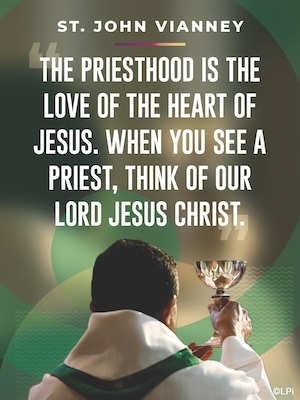 May the Lord give you peace! This Sunday is the annual "Priesthood Sunday," a day dedicated to honoring priests and recognizing their vital role in our spiritual journeys. The sacraments of the Church are essential for attaining eternal salvation. Consequently, the role of the parish priest is indispensable when it comes to Eternal Life.
At this moment, I am writing as a fellow baptized Catholic who recognizes my own personal need for good priests. As a priest, I can't save myself. I can't anoint myself; I can't forgive myself in the Sacrament of Reconciliation. I didn't baptize myself, give myself First Holy Communion, or ordain myself. I recognize a great debt to the good priests who have served me so faithfully and will continue to serve me until I depart for my eternal rest.
Although the validity of the sacraments doesn't depend on the moral character of the priest, his example can either enhance or hurt the spiritual lives of the parishioners he serves. St. Augustine in the 5th century wrote stingingly about the example of “bad” priests. He stated: "As for wicked shepherds themselves, they kill the sheep. 'How do they kill them?' you ask. By their wicked lives and by giving bad example... Even the strong sheep, if he turns his eyes from the Lord’s laws and looks at the man set over him, notices when his shepherd is living wickedly and begins to say in his heart: 'If my pastor lives like that, why should I not live like him?' The wicked shepherd kills the strong sheep. But if he kills the strong one what does he do to the rest?"
Bishop Kemme recently shared with the priests of the Diocese of Wichita that his number one priority is building a healthy presbyterate. He stated that he wants to do everything in his power to cultivate holy, happy, and healthy priests. It was such a consolation to hear this from his lips as the chief shepherd of the Diocese. Each of us priests is a sinner; we, too, go to confession. However, it is of the utmost importance to the salvation of each one of us that our priests, although sinners, strive every day to be holy, happy, and healthy. Please join me in praying daily for our priests, especially the priests of the Diocese of Wichita and of the Church of the Magdalen.
Ad majorem Dei gloriam, Fr. John F. Jirak, Pastor
Team Leadership
Sunday, September 8, 2024
May the Lord give you peace!
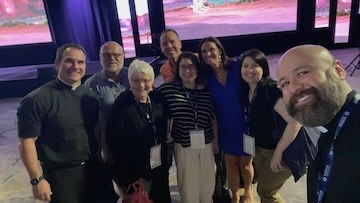
Last week, I spent three days at the Amazing Parish Conference in San Antonio, Texas with our Parish Leadership Team. I joined Bishop Kemme and nine other priests from the Diocese of Wichita for the conference. The purpose of the annual conference is to build and nurture the behaviors of a good leadership team in order to have a flourishing parish.
Team leadership is not a new concept in the Catholic Church. Jesus, the “Good Shepherd,” devoted much of His time and ministry to forming a team of Apostles to send out as shepherds to make disciples, baptize, and teach in His name. Moreover, Pope Francis has been insistent on a more synodal mode of being Church. Synodal literally means to walk on the path together.
There has been a shift to return to a more collaborative, synodal method of Church leadership among priests who serve as pastors of parishes. This does not mean that decisions are made as a team and that the team rules. Canon Law ultimately holds the Pastor responsible for the decisions made in the parish. Instead, it promotes a team-based approach where a select group of parishioners supports the pastor in upholding and advancing the parish’s vision, mission, and priorities. This team also plays a crucial role in addressing strategic and pastoral matters crucial to effective governance.
This collaborative model was introduced into U.S. Catholic parishes about eleven years ago by leadership expert Patrick Lencioni who emphasizes that the effectiveness of leadership is contingent upon the health of a Parish Leadership Team. He identifies five key behaviors that underpin a healthy team: trust, healthy conflict, commitment, accountability, and results.
This is my eleventh year of using this method of leadership as a pastor. I began learning it as pastor of Blessed Sacrament. This was my sixth conference. I still feel like I have a lot to learn, but I am so thankful for this model and for those parishioners who have committed to our Parish Leadership Team who work together each week to advance our parish vision to “Be a community of missionary disciples fully alive in love of God and neighbor” and our parish mission, “Be Disciples. Make Missionary Disciples.”
Ad majorem Dei gloriam,
Fr. John F. Jirak, Pastor
Our Parish Leadership Team: Fr. John Jirak, Tom Simon, Kit Lambertz, Jason West, Carey Boyzuck, Meghan Polk, Holly Beard, & Fr. Marco De Loera
Having A Pilgrimage Mindset
Sunday, September 1, 2024
May the Lord give you peace!
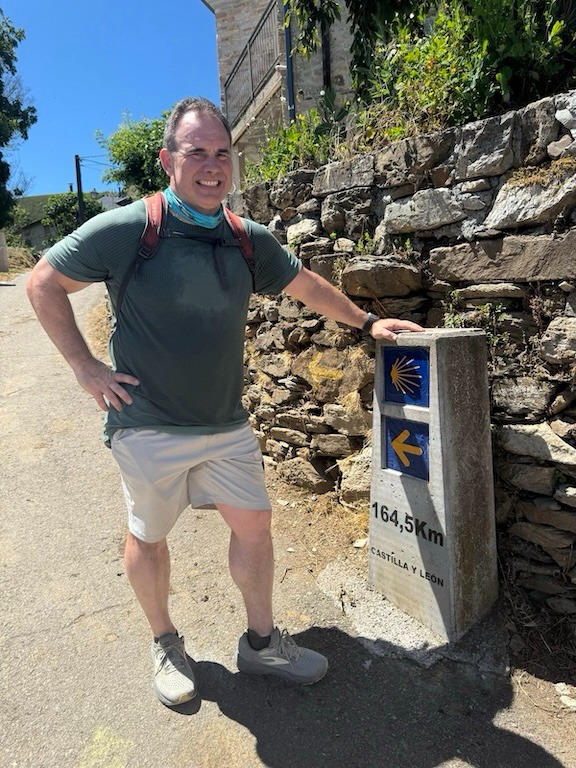
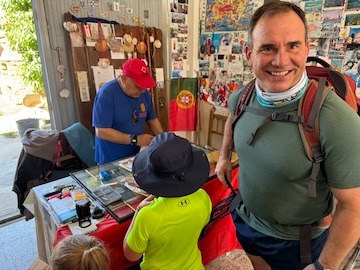
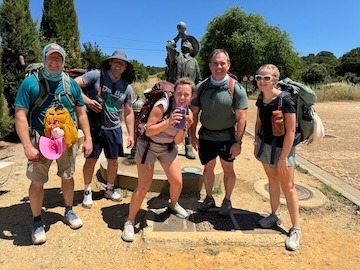
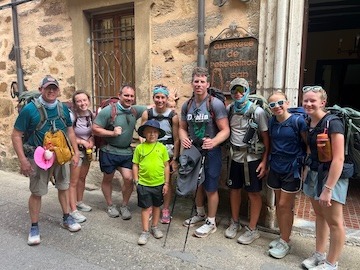
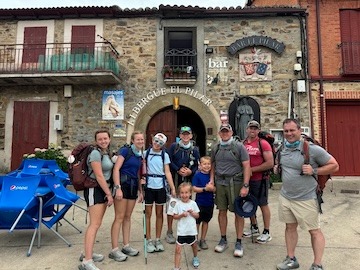
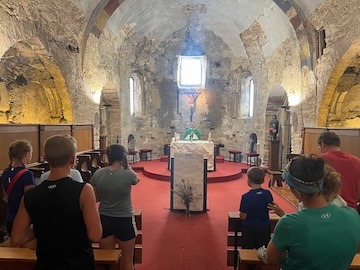
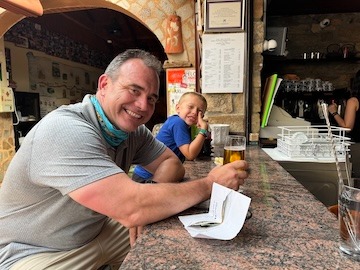
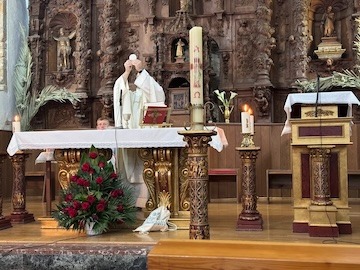
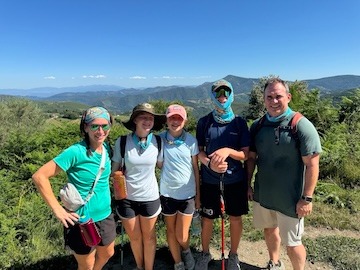
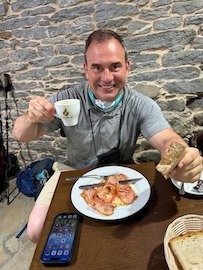
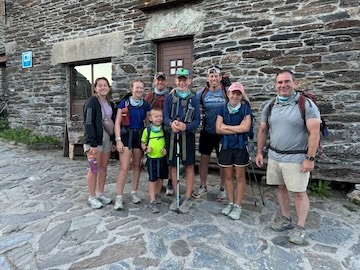
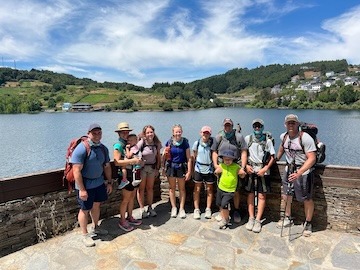
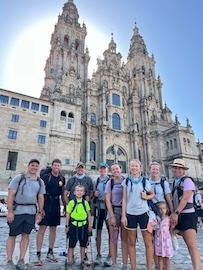
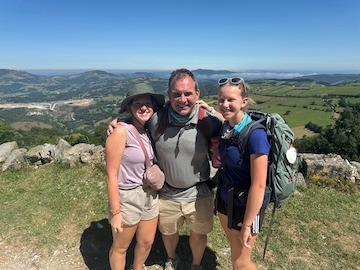
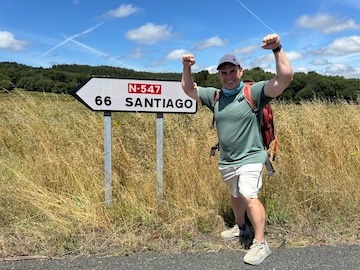
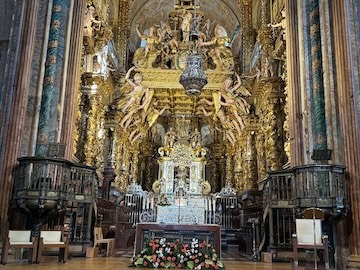
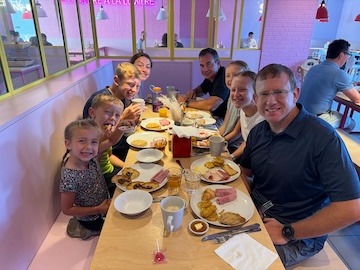
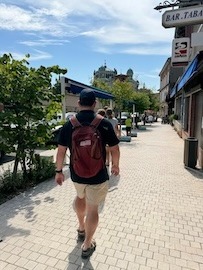
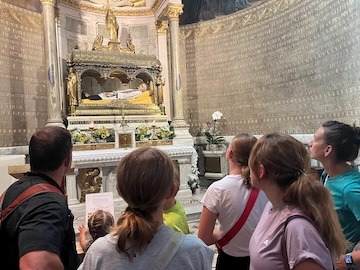
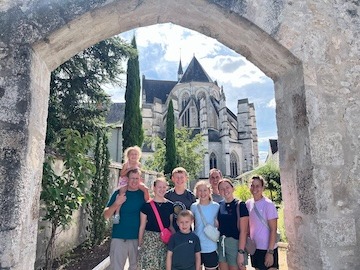
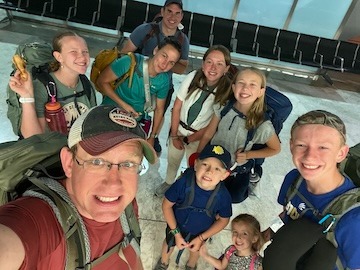
I am happy to be back in the pastor’s saddle after an epic pilgrimage. I spent two weeks (12 days of walking) on the Camino de Santiago in Spain with my sister Maria, brother-in-law Travis, and their six children. The youngest, Cecilia, is four years old. We walked over 170 miles from just outside of Leon, Spain to Santiago de Compostela. I said it was epic, not easy. The walk was much more difficult than I anticipated. First of all, I prepared foolishly, packing a bag that weighed over 30 lbs. Second, I was in good physical shape, but not in good hiking shape. There is a difference. The difficulty is not in a day’s walk itself, which runs anywhere from 13-20 miles. It is the 8 plus hours of walking day after day, with a backpack and usually getting less than optimal rest. We stayed in public albergues (hostels for pilgrims) located in villages and towns sprinkled along the Camino.
My second experience in an albergue was the most striking. We were in a large room with around 100 single bunk beds and around 40 people from all around the world. We were the only individuals who spoke English. All of these men, women, and children sleeping in the same room, sharing showers and bathrooms. Much snoring, very smelly. Yikes, I was out of my comfort zone. Dorothy wanted to go back to Kansas for a moment. However, that thought passed and underneath, within me was a firm desire to have the entire pilgrimage experience.
It was a personally felt and seen desire to finish the pilgrimage. I knew that the desire was spiritual because I could not understand the logic of it. In fact, my sister was trying to convince me to ship my bag each day ahead to the next village to ease my trek. To her request, I only felt aversion and repugnance. No, this was something that I needed to do no matter how many blisters I accrued. The more than one thousand-year-old trail has been a way of pilgrimage and penance for millions of Catholics. It runs through mountains, hills, plains, towns, and villages. The walk does something to you. I will be unpacking it for some time. I had no “knocked off a horse” St. Paul experience. Yet something deep was happening and I knew it was happening, but I couldn’t put forth one word to describe it.
One of the things that I can name is that the Camino has left me with a pilgrimage mindset. That life on earth for the Christian is to be one of pilgrimage. This life is not our destination. The walk is beautiful; there are many joyful surprises. It is very difficult, it is painful, and you must keep walking, looking for the next yellow arrow until you ultimately reach your destination.
Ad majorem Dei gloriam,
Fr. John F. Jirak, Pastor
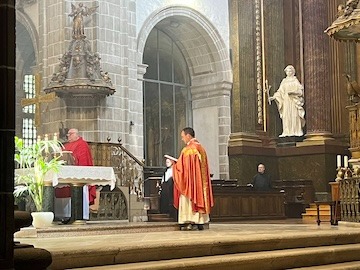
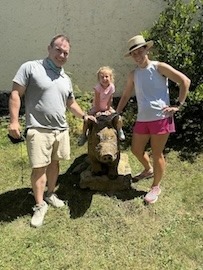
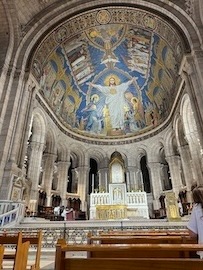
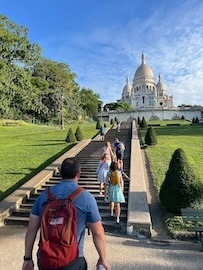
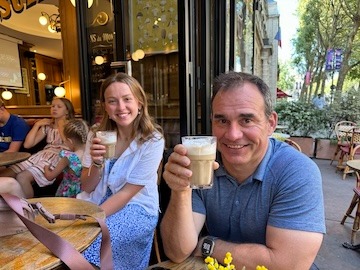
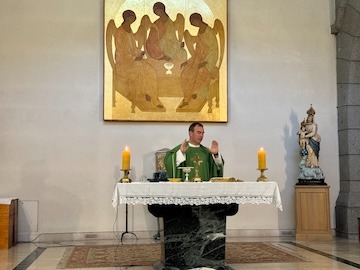
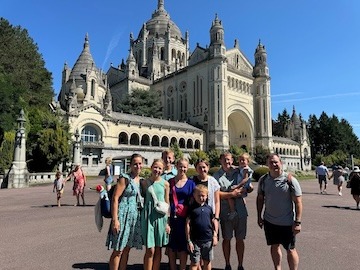
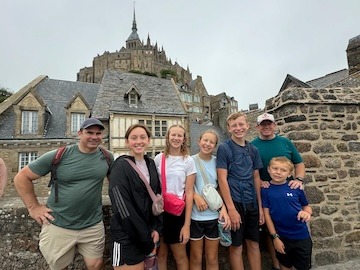
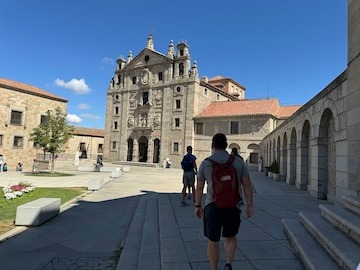
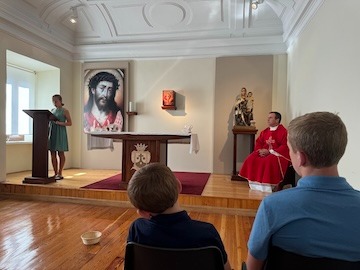
Here's a collection of photos from Father's adventure!

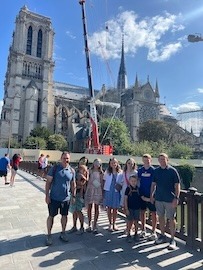
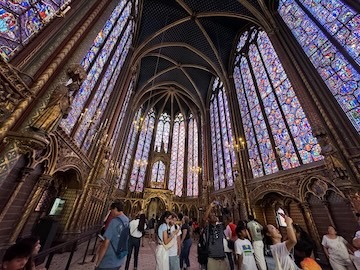
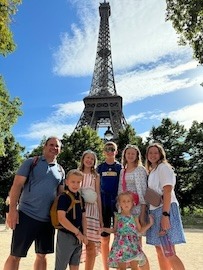
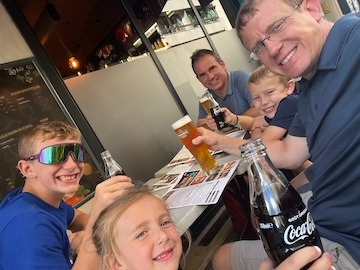

Accompaniment: Walking With Others
Sunday, August 4, 2024
May the Lord give you peace!
Very soon we will launch this year’s Parish School of Religion (PSR) and Becoming Catholic (OCIA) ministries. Although the purpose of each of these ministries is distinct, they are both forms of Catholic accompaniment. The second of our three parish priorities is to “accompany one another in following Jesus Christ.” In PSR, parishioners serve to educate and form our young people in the way of Jesus. In Becoming Catholic (OCIA), parishioners accompany individuals through an eight month journey of learning and discernment to join the Catholic Church at Easter.
When it comes to “accompaniment,” all of us are called to walk with others in various states or stages of life. Accompaniment is more of a marathon than a sprint. It takes perseverance. Walking with others is an essential component of missionary discipleship. By accompanying one another, walking with them on the Way, we carry out the mission Jesus imparted to us in Matthew 28, “Go, therefore and make disciples of all nations...”
One way you can practice accompaniment is to invite someone you know to consider learning more about the Catholic faith. Keep it simple by praying about who you could invite, thinking about three people that come to mind, then inviting one of those people to a special Becoming Catholic meet & greet dinner on August 21 where they can learn more. Then personally accompany them to the meet & greet and throughout their discernment process.
Personal accompaniment requires each of us, and the growth of the Kingdom of Heaven depends upon it. Who are you accompanying? Who are you walking with on the Way? Who is accompanying you? No one enters the Kingdom of Heaven alone!
Ad majorem Dei gloriam,
Fr. John F. Jirak, Pastor
God, The Source of All Good
Sunday, May 12, 2024
May the Lord give you peace!
Tis the season for graduations. During the next two weeks, our parish will celebrate the graduating students from our Catholic and area schools. There will be Masses, commencements, assemblies, dinners, parties, and other ways to celebrate the achievements of our students. This is indeed good, but how do we make the celebrations great?
We make the celebrations great by rooting our gratitude and praise in God, who is the giver of all good things. I have to admit that it is often not that easy to connect the good things of this earth and in our lives with the loving hand of God. Since understanding and knowledge come to us first through the senses, seeing our achieve- ments as coming from the hand of an invisible God is a challenge. In fact, without God’s assistance, it is impossible.
So then how do we make the connection between our successes, such as the achievement of graduation, and God who is the source of all good things? It really comes down to faith and the Holy Spirit. Faith recognizes a reality that is beyond the senses, namely, the ultimate reality that we call God. Moreover, faith proposes that God is the author and creator of all that is good. The role of the Holy Spirit is to bring about within us a conviction and understanding that although this belief is beyond what we can know with our senses, the goodness that we are experiencing originates and is sustained by a loving heavenly Father.
Rooting our gratitude in God does not take away from what our graduates have done. Rather, gratitude rooted in God through faith and the Holy Spirit fills in the whole picture and leads to ultimate fulfillment. St. Ignatius of Loyola saw the work of relating the good that we possess, e.g., graduation, to the bounty and generosity of God as the foundation for life. In what St. Ignatius defines as the “first principle and foundation” of the spiritual life, he states, “Man is created to praise, reverence, and serve God, and by this means to save his soul.”
Parishioners who are graduating, we are very proud of you and we give thanks and praise to God who has brought your hard work to fulfillment.
Ad majorem Dei gloriam,
Fr. John F. Jirak, Pastor
He is Risen! Indeed, He is Risen!
Sunday, Mar. 31, 2024
May the Lord give you peace!
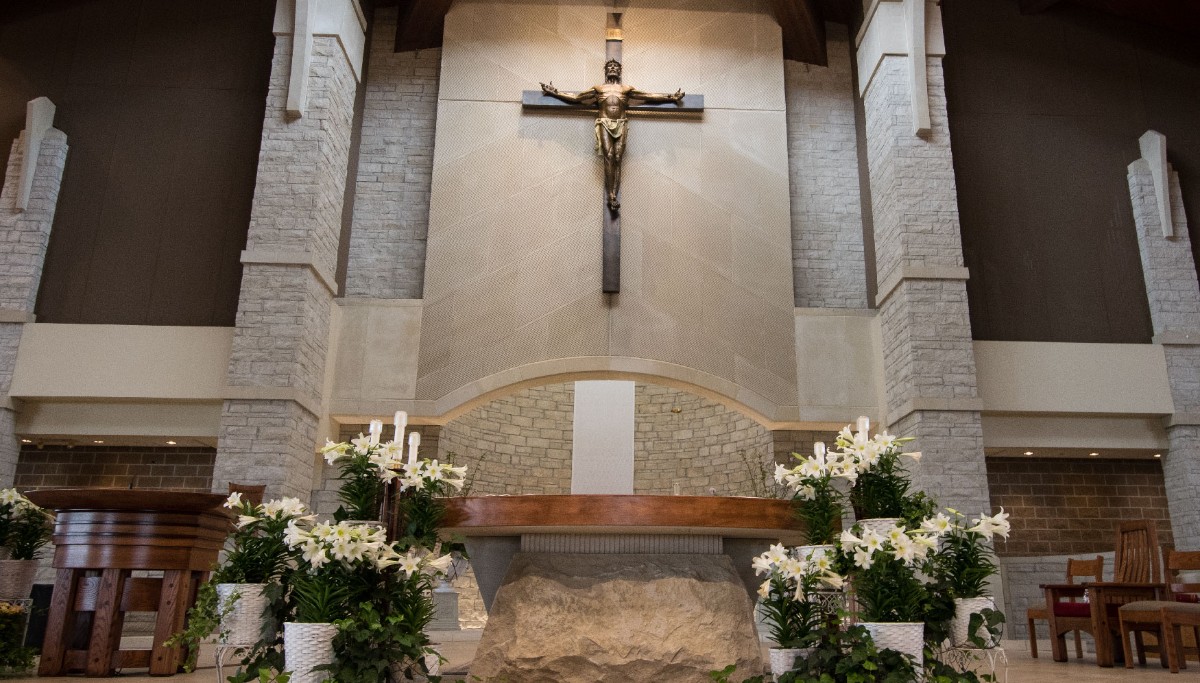 I begin with the Easter salutation and traditional exchange of Eastern Catholics on this greatest of days extending through the Octave of Easter. “He is risen” paired with the emphatic “indeed” speaks to an interior strength that moves us in a new direction. St. Paul speaks of this strength and new direction in the second reading for Easter Sunday from Colossians 3: “If then you have been raised with Christ, seek the things that are above, where Christ is, seated at the right hand of God. Set your minds on the things above, not on the things that are on earth.”
We have been raised with Christ, “indeed,” through the sacrament of Baptism and renewed through the sacrament of Reconciliation. Jesus Himself feeds us His resurrected life every Resurrection Day (Sunday) in the Eucharist. In Mass we are raised with Christ in our vocation, whether single, married, or religious throughout the week. To “seek the things that are above” means to intend, to will, to choose. We don’t leave the earth but seek the will of God in everything that we do and so raise the world to where Christ is seated. To “Set your minds on the things above” means to think in a particular way. We need to consider, deliberate, and take counsel in all things in the context of what is “above.” The famous saying, “What would Jesus do?” is a great question that can help raise the mind and will to Christ.
The power of the Resurrection in the Christian life introduces a new horizon for our lives as Pope Benedict XVI once so beautifully wrote. This new horizon demands our personal response. We participate in the Resurrected life with our mind (intellect) and will. These two powers are the image of God within us and are the means to our participation in Christ’s own Resurrected life. Yes, indeed, it is so.
Ad majorem Dei gloriam,
Fr. John F. Jirak, Pastor
Four Steps: The Light of Faith During Trials
Sunday, Feb. 25, 2024
May the Lord give you peace!
This is the final column of a four-part series on how to use one’s faith in the midst of a crisis. This series was inspired by what I can only call a parish crisis that occurred about five weeks ago. It was not a long, drawn-out crisis, but it was certainly a crisis. It all developed at the surprise announcements of Fr. Kerschen leaving for McPherson, Fr. Seth leaving half-time for Kapaun, and Fr. Voelker being assigned as senior
parochial vicar to the Church of the Magdalen before resigning this position. (btw, Fr. Seth still does not enjoy being called a “half priest.” Since his favorite work of literature is the Lord of the Rings trilogy, maybe I will start calling him a “halfling,” like Frodo Baggins.)
In responding to a crisis, we must bring the eye of faith to the struggle. Once faith is introduced to the crisis, we call it a “trial.” We have a wonderful example of a trial in today’s first reading when God calls Abraham to sacrifice his son Isaac as a holocaust (Genesis 22). We call Abraham’s crisis a trial because he relates to it with faith. It was the greatest of all trials and serves as the paradigmatic testing of the disciple first fulfilled in God who did not spare his only son.
In bringing faith to our parish trial or any other trial, St. Catherine of Siena proposes four successive steps. She states, “There are four chief things we must have and ponder.”
- First, she states that “we must have the light of faith.” She states that without this light on our trials the person takes the trial “for night, a night of hate. Believing it is out of hatred that God permits these trials and difficulties.” Wowzer!!!
- Once we have the light of faith, we must actually believe. She states that “we must not only believe but must be certain that God is, and that everything that has being proceeds from God except sin.” She continues: “Everything is done with mystery and out of love, not out of hatred.” I find that people often struggle with the necessary conviction required for this step. We often waver with a paralyzing confusion and doubt as to whether the trial is from God. If you remember my homily on the occasion of the priest change crisis, which I now call a trial, the words that most changed my trajectory in this matter were from Sister Connie. Sister’s exact words to me: “With all my penned thoughts and feelings, I know this is all in God’s Providence.”
- Next up: “We must see and know in truth with the light of faith that God is supreme eternal Goodness and cannot want anything but our good.” This step is similar to step two. Step two is focused on God’s acts while step three is focused on God himself. I can’t help but to think of the Serpent’s temptation to Adam and Eve in the Garden of Eden. By suggesting that “God knows that when you eat of it your eyes will be opened, and you will be like God, knowing good and evil,” the Serpent was introducing the question of whether God could be trusted. Is he truly good? We must not presume to think that we are always convinced of God’s intrinsic goodness. Our actions often betray us in this regard.
- Finally, St. Catherine states, “if we are to arrive at ‘true patience’ in this (trial): we must ponder our sins and faults, how much we have offended God, who is infinite Good, and how from this would follow infinite punishment.” What, why do we need to ponder our sins in times of trial? Wow, and we are called not to simply remember, but to ponder, or think about deeply. Well, we just have to dig a little deeper to see that our self-righteousness often perceives and believes that the trials that we suffer are not fair. The implication is that we are the good ones and don’t deserve to suffer. We often put God “on trial” when we experience trials. Pondering on our sins returns us to the truth as St. Catherine states: “God is he who is, and I am she who is not.”
She continues that if we work these four steps by bearing “our trials with patience, we cancel our debt and we gain merit.” She exalts this way of faith in trial as supreme over the sufferings that one experiences in purgatory as in “purgatory one cancels debt but gains no merit.”
In responding to our parish trial, I also hope that you might experiment with St. Catherine’s four steps in the trial or trials that you are currently experiencing. As Job states, “Is not the life of man upon earth a state of trial?” No way around it.
Ad majorem Dei gloriam,
Fr. John F. Jirak, Pastor
Examining Loss
Sunday, Feb. 11, 2024
May the Lord give you peace!
Last week I discussed the need for patience and reason during adversity. This week I will offer a model from an expert in leadership, Patrick Lencioni, on structuring our thinking about how to examine loss that causes adversity. His work leans on the works of William Bridges, an expert in leadership during times of transition. Lencioni identifies seven types of loss: turf, attachments, meaning, control, future, identity, and structure.
I’d like to look at how we can use these types of loss to think about our parish’s adversity. Let’s use an example of the loss of the 5:30pm Mass on Tuesday to illustrate this way of recognizing and naming the loss that is causing the adversity. When we can identify the type of loss we’re experiencing, it’s easier to work through the emotions that come with it. This is just one example of adversity that we may face over the coming months. Let’s break down the different types of loss people may experience:
Turf: With the loss of the 5:30pm daily Mass, some people may experience a loss of turf or place of ownership. They may think: “This is where I come for Mass every Tuesday evening. That turf has been taken from me. I’m angry.”
Attachment: Others may experience a loss of the attachment they have with people. They might think, “I have built relationship with the 5:30 Mass goers over the years. I won’t see them on Tuesday evenings anymore. I will miss talking to Frank. I’m sad.”
Meaning: Still others might have a deep sense of meaning attached to attending specific Masses. They may think: “The 5:30 Mass on Tuesday gave the day a sense of spiritual meaning. I’m discouraged.”
Control: Some people may be frustrated with a sense of loss of control over the situation. They may think, “I don’t have control over the cancellation of the Mass. I’m angry.”
Future: Others might fear what the future holds due to the change. They might think, “I had such a good routine in attending the Tuesday 5:30 pm Mass each week, and I don’t have that opportunity to look forward to in the future. I’m fearful about what will come next.”
Identity: Some people may experience a loss of identity with the change. They might think, “The 5:30 Mass on Tuesdays gave me a strong sense of who I am as a disciple. Now what? I’m discouraged.”
Structure: Last, others may be upset by the change in the structure of their schedules. They might think, “I have my week arranged around attending the 5:30 Tuesday Mass. Now when will I attend Mass if I want to go on Tuesdays? I’m frustrated.
These are all different types of loss that we must travel through when dealing with the adversity resulting from change. St. Thomas Aquinas identifies several types of emotions that we may experience with loss including fear, anger, and despair/discouragement. The passions can be very strong, and patience with ourselves and with one another will be important. We can also try to offer each other extra care and compassion during this time. In this way, we can continue to grow in charity.
As Catholics, we have even more than these natural tools to address our losses. We also have faith. In my next article, I will address patience in adversity through four-step method of St. Catherine of Siena. I’ll focus on seeing adverse situations with faith and employing “holy patience.”
Ad majorem Dei gloriam,
Fr. John F. Jirak
Patience in Adversity
Sunday, Feb. 4, 2024
May the Lord give you peace!
This past Thursday, Fr. Kerschen began his new assignment as pastor of St. Joseph Catholic Church in McPherson and St. Bridget Catholic Church in Lindsborg. On the same day, Fr. Seth began his assignment as half-time chaplain of Kapaun Mt. Carmel High School. Fr. Seth will be half-time here at Magdalen. By the way, Fr. Seth does not like when we call him a “half priest.” They are both very excited to start their new missionary adventures.
The priest moves leave Magdalen in the lurch. In one day we went from three full-time priests to one-and-half priests (Reminder: Fr. Seth is not a “half priest.”) Moreover, the loss has been amplified on two fronts: Both of these priests are top-notch and next-level in the way they exercise their priesthood. This is a huge loss for our parish. Secondly, no one is replacing them until summer.
This is the second of a series on responding to a serious challenge with both reason and faith. This challenge has risen to the level of a crisis at times over the past three weeks. In my last article, I offered the proposal that we step into this challenge with both reason and faith by focusing on approaching our challenge as an opportunity for growth in love for God, which is called charity. St. Thomas Aquinas states that there are two ways for us to grow in love for God: separation of the heart from earthly things and patience in adversity. I will focus this reflection on the way of “patience in adversity” to grow in charity.
Adversity literally means something is turning against us. It includes a component of great difficulty. The great difficulties for our
parish include the loss of two great vicars and the loss of anyone to replace them. Moreover, our adversity was greatly intensified by the assignment and resignation of Fr. Voelker as senior parochial vicar. In fact, all of the circumstances around his assignment and its varied effect on our parishioners made for a crisis situation.
Patience in adversity as a means to grow in charity, love for God, means that the adversity remains. God does not take us out of the adversity. We suffer it; we endure it. However, we don’t suffer it blindly, and we don’t “white knuckle” the endurance of it. We must apply both faith and reason to the situation. Reason is the connect- ing power of the mind. With reason, we find motivation for acting and we recognize the causes and effects of events and behaviors. Relative to the suffering involved with adversity, reason needs its reasons. In other words, reason must be applied to what we are experiencing.
Next week, I will offer a model from an expert in leadership, Patrick Lencioni, on structuring our thinking about how to examine loss that causes adversity with the eyes of reason. After that, I’ll focus on how to have “holy patience” in the midst of adversity with St. Catherine of Siena as our guide.
Ad majorem Dei gloriam,
Fr. John F. Jirak, Pastor
Growth in Charity
Sunday, Jan. 28, 2024
May the Lord give you peace!
I continue my reflection on the subject of virtue. Today I would like to introduce the virtue of charity, its importance, and some practical application to challenges our parish has been involved in lately. This article will be delivered in three parts over three consecutive weekends.
Charity is a type of love. It is not love of self. It is not love of neighbor. It is love of God. Love is to will the good of the other and in the case of charity, it is to will the good of God. Accordingly, when I love a friend for the friend’s sake, this is love but not charity. When I love a friend for God’s sake, the love for my friend is then taken up into the special love that we call charity.
Charity is the form of all the virtues. For example, my love for God must shape my personal Virtue of the Year, meekness. If my growth in meekness is not motivated out of my love for God, it incurs no merit for the Kingdom. Continuing the illustration: According to St. Alphonsus Liguori, one of the two chief activities of meekness is bearing insults. Therefore, meekness formed by charity is bearing insults out of one’s love for God. Regarding charity as willing the good that God wills, meekness has a special place as one of the goods that God wills. Meekness is explicitly listed as a beatitude: “Blessed are the meek for they shall inherit the earth” (Matthew 5: 5). Also, it is a favorite virtue of Jesus himself as he states that he is “meek and humble of heart.”
This leads me to the next consideration: How does one grow in charity, i.e., love of God? As I mentioned in a previous reflection at the end of our lives we will be judged by love and not just any love, but charity love. St. Thomas Aquinas states that there are two ways in which we can grow in charity:
- Separating our heart from earthly things, i.e., detachment
- Patience in the midst of adversity
Aquinas addresses “How to get and increase charity” in his article on the 10 Commandments. Regarding patience and adversity he states, “The second factor helping love to grow is firm patience in adversity.” The logic for why we grow in love of God through patience in adversity:
- St. Thomas gives an anecdotal answer, “when we carry heavy burdens for the sake of the one we love, love is not destroyed, but rather grows.”
- “This is why the more sufferings the faithful endure for God’s sake, the more they are raised high in his love.”
Next week I will consider the growth in charity, patience in adversity, and the great adversity we faced and are continuing to face with the announcement of the priest assignments on the weekend of January 13 and 14.
Ad majorem Dei gloriam,
Fr. John F. Jirak, Pastor